
Technology
Biology Background:
Mitochondrial Priming Drives Drug Response
A fundamental hallmark of cancer is dysregulated apoptosis, the programmed cell death process controlled by BCL-2 family proteins at the mitochondrial outer membrane. The precise balance of anti-apoptotic defenders and pro-apoptotic executioners—termed mitochondrial priming—determines whether a cancer cell survives or dies after therapeutic intervention
Anti-Apoptotic Proteins
BCL-2, MCL-1, and BCL-xL act as survival sentinels, blocking cell death pathways
Pro-Apoptotic Effectors
BIM, BAX, and BAK drive mitochondrial permeabilization and apoptotic signaling
Dynamic Equilibrium
The shifting balance between these proteins dictates therapeutic vulnerability as described in the “rheostat” model. This biological premiss is now known to involve multiple factors. Measuring shifting PPI equilibrium in cancer cells has shown to be clinically relevant.
PRIMABS™-Dx Innovation Driven Biomarker Discovery and Implementation
The PRIMABS™-Dx platform interrogates BCL-2 protein family PPIs in biopsied patient tumor cells. The unique method relies on a panel of novel conformation-specific antibodies (PRIMABS) that are highly specific for complexes of pro-survival proteins bound pro-apoptotic protein BIM. These heterodimeric complexes are determinants of primed cancer cells and are the direct targets of the BH3 mimetics class of oncology drugs. They are essential pharmacodynamic and predictive biomarkers for this class and for a broad range of apoptosis therapies.
Specifically, we quantify how BH3 mimetics, like venetoclax, disrupt anti-apoptotic PPIs to unleash cell death, providing direct insights into drug response at a functional level.
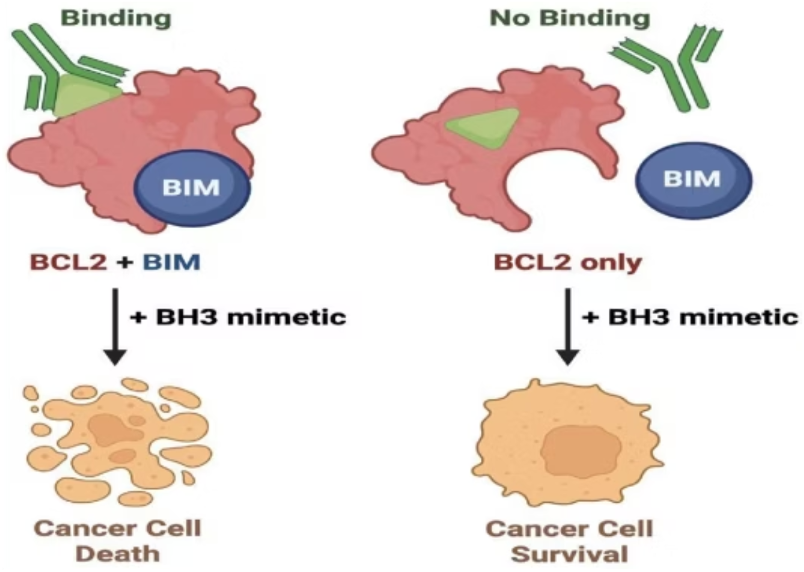
The image illustrates how the bound BIM induces a conformational change in BCL-2 that exposes the PRIMAB, a recognized epitope.
Approach: PRIMABS Antibodies Read Out Priming Protein Interactions
PRIMABS are proprietary conformation-specific antibodies that precisely detect heterodimeric complexes of BCL-2, MCL-1, and BCL-xL bound to BIM in patient samples. These molecular complexes represent hallmarks of primed cancer cells and serve as direct pharmacodynamic targets of BH3 mimetics such as venetoclax.
By capturing these transient protein-protein interactions, PRIMABS-Dx provides a functional snapshot of each tumor’s apoptotic vulnerability that genomic sequencing cannot reveal.